
NewsSearch & Traffic
Google launches Universal Cart in the US, separating shopping from the store visit
The new cart spans Search and Gemini. Merchants should distinguish checkout on Google from a handoff to their own site before interpreting referral traffic.
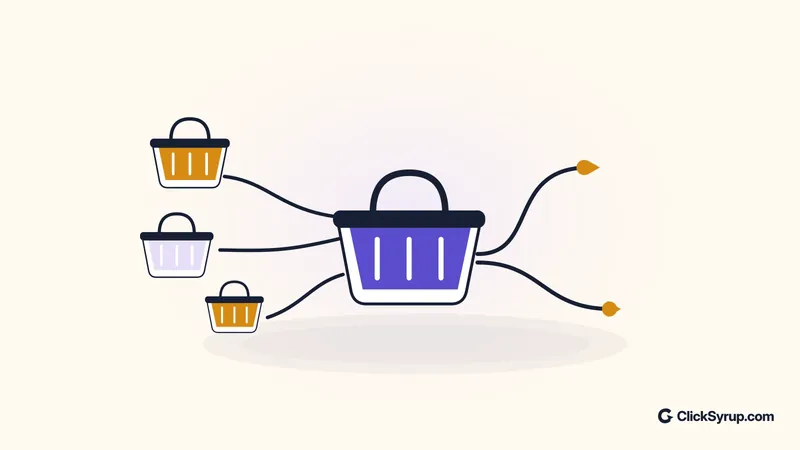
Google began rolling out Universal Cart in the United States on October 15, 2026, bringing a shared shopping cart to Google Search and Gemini. Shoppers can collect products from different retailers, but the destination of the purchase still matters: supported purchases can be completed through Google Pay, while another path transfers the cart to the retailer's website. Google's announcement describes both options.
For a website owner, the practical question is not simply whether Google sends more visitors. It is where discovery becomes a purchase, and which system records that transition. A completed order and an additional website session are different outcomes.
A common cart does not mean universal merchant access
Google says retailers remain the sellers of record and handle order confirmations and customer support. The cart also supports price and restock tracking. These are announced capabilities, not evidence that every store, product or account can already use every purchase route.
The Merchant Center integration documentation describes a gradual US rollout, access for selected merchants and technical eligibility requirements. A consumer launch therefore should not be read as automatic enrollment for an existing product feed. Merchants using an outside commerce provider should ask that provider which integration path it actually supports.
Two purchase routes need different checks
Google's UCP implementation guide separates native checkout from cart transfer. Native checkout handles the purchase on Google's surfaces; cart transfer hands the shopper to the merchant's website. Google also warns that the evolving protocol contains features that are not yet supported on its surfaces.
Before changing a revenue forecast, ask the person responsible for the integration to demonstrate both the intended purchase route and its failure behavior. Does the customer receive the correct order confirmation? Are shipping charges and available stock consistent? Can support identify the order without asking the customer to reconstruct the journey?
For measurement, compare orders, revenue and referral sessions rather than treating them as interchangeable. A change in visits alone cannot establish whether this cart generated additional sales, moved an existing purchase into another channel or had no material effect. The same discipline applies when investigating an apparent traffic drop.
Publishers have a different decision
A publisher that earns affiliate commissions is not necessarily a merchant participating in checkout. Google's launch announcement does not establish how an individual affiliate agreement will credit these shopping journeys. Do not infer commission eligibility from the presence of a product in the cart.
Instead, revisit the agreement's qualifying action, tracking conditions and exclusions, following the checks in our affiliate program evaluation guide. Ask the program operator for a documented answer where the new journey is not covered.
The immediate action is an integration and measurement review, not a wholesale rebuild of product pages. Record the routes your business can actually use, test an order through each supported route and keep the US launch separate from any future expansion. Universal Cart creates another purchase surface; its effect on an individual site's traffic or revenue remains something to measure.
Primary sources
- Google's announcementblog.google
- Merchant Center integration documentationdevelopers.google.com
- UCP implementation guidedevelopers.google.com
Related reading

GuideSearch & Traffic
How to investigate a website traffic drop before changing everything
Separate a measurement problem from a real audience loss, then narrow the affected pages and channels before choosing a fix.

GuideMonetization
How to evaluate an affiliate program before adding its links
Start with reader fit, then trace how a referral becomes an approved commission and an actual payment.
NewsSearch & Traffic
Google puts more source links into AI Search, but publisher traffic remains an open question
On October 15, Google announced more visible inline links, news carousels and source profiles in AI Search. The design changes are real; a traffic recovery is not established.